
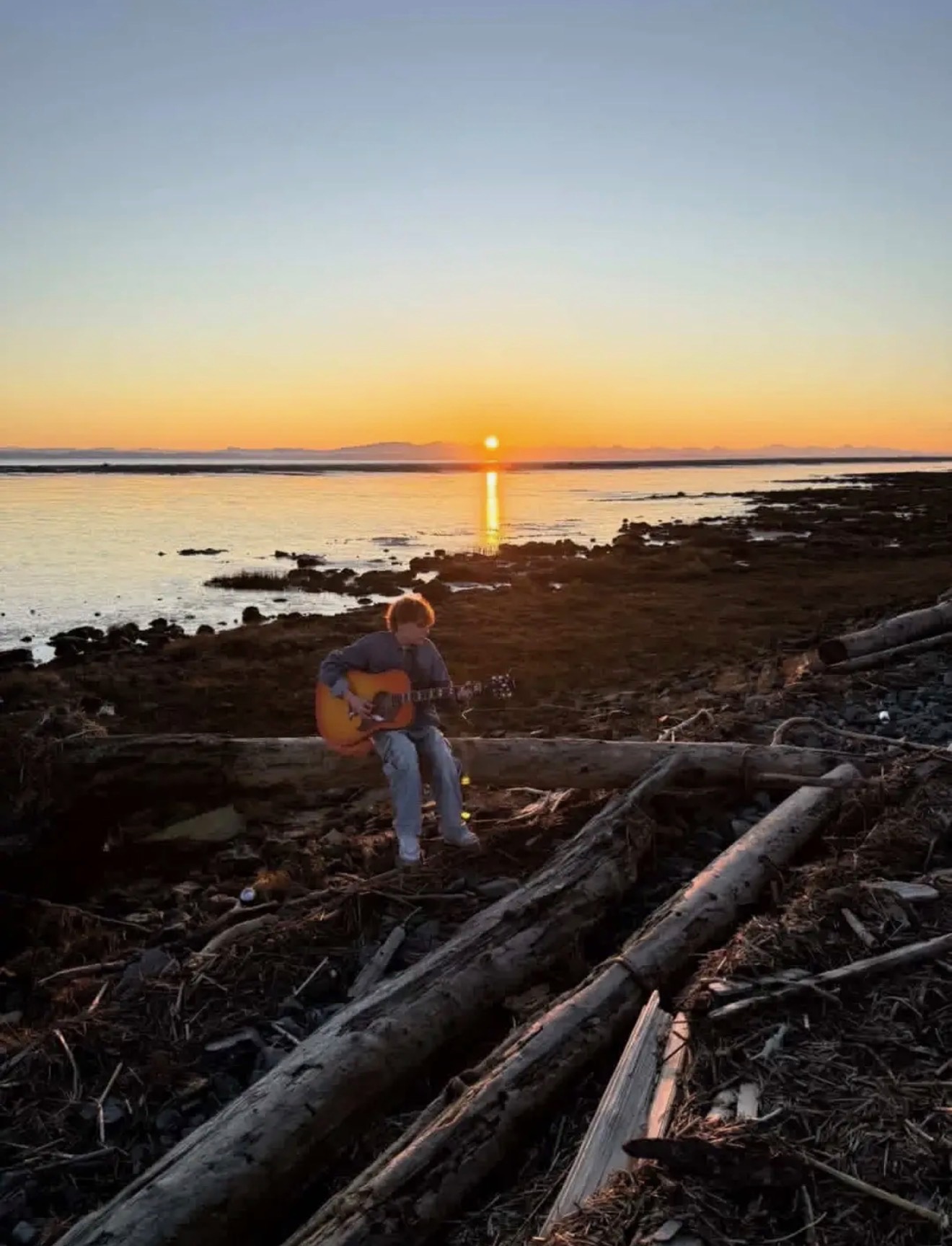
At just eighteen, Kiefer Bahrich carries the kind of lived-in perspective that most artists spend decades trying to earn. His debut EP That’s Alright isn’t simply a collection of songs—it’s a document of survival, stitched together from moments of doubt, isolation, and quiet resilience. With a sound rooted in the sun-drenched ease of 1970s country-rock and a heart shaped by very real battles, Bahrich emerges as both a dreamer and a fighter, channeling pain into melody and uncertainty into purpose. In this candid conversation, he opens up about the late-night spark behind his songwriting, the refuge he found in music during his hardest days, and the unwavering belief that even in life’s darkest moments, something beautiful can still take shape.
- Kiefer, you’re only eighteen, yet the story behind That’s Alright speaks about doubt, rejection, and resilience. When you look back at that difficult moment in your life, what do you think it revealed about who you really are?
The hardest times to me reveal a side of me that can make incredible things happen. It’s a fact that pressure makes diamonds, people are the same to me. The one unique thing tough times have shown me is that when I get upset or down, I play my guitar. My family knows more than anyone, when I’m down, they’ll know because I’m in my room with the lights off playing guitar. It’s therapeutic to me, the sound, the feeling of the guitar. It’s kind of like a release of energy from myself to this device of music. I feel incredibly lucky to have my guitar, it’s been my friend through a lot of hard teenage years, but more than that, this peaceful country rock as well. Its something missing in today’s music, that I bring in a vibe that now, more than ever people need to hear.
- You’ve said the song “That’s Alright” came to you at two o’clock in the morning, after a particularly painful day. Tell me about that moment. What was going through your mind when you realized you had to get up and write it down?
I write all of my music at night. I like to be isolated while I write, but my best writing has come to me after I’ve been asleep! I think it’s because when I’m asleep I’m processing the things of the day to throw away. But when these moments happen, I can feel it. It’s magical, I’m not really in control. It’s so strange because afterwards these songs don’t even feel like I wrote them, they just feel like they’ve existed forever. That night when I wrote that’s alright was one of them. It was such a release because I had had a terrible day, I’ll get to that later on, but it was really a release of energy pent up. Its so important to me when I can hear a song in my head and it just appears and so I get it down quickly before I fall back asleep. I’m sure I’ve lost a lot of good songs this way!
- Many young artists dream of leaving home to find something bigger. When you wrote these songs, what did “escape” or “freedom” look like to you personally?
I have grown up in an old fashioned house, where the California dream is very much alive in my childhood, we were just trapped one border up! So these songs, the eagles, Jackson brown, they gave me this concept of this place where people accepted people more. I kept this idea myself close to heart, I’ve really faced a lot in my life of bullying. This one day I really got beat up, just a terrible day. I don’t believe in staying stuck in things, I really believe in getting up and keeping going. I’m a fighter, it’s one of the qualities that is great for being a musician. I keep coming back no matter what. I went to bed with this pain, woke up with this image of the 70s, California, this girl from Pasadena holding her hand out and saying, hey keep being you man. Woke up and this thing was there. In a way, this is the escape and freedom, these songs, the ability to have this talent and to make something of it is the biggest satisfaction against people who mistreated you or didn’t believe in you. It’s the real freedom.
- Your road trip along the California coast — listening to The Eagles — became a turning point in your story. Was there a moment on that drive when you felt your dream suddenly felt possible again?
It was a turning point because these songs just hit me and this idea of this California dream hit me. Honestly it showed me who I want to be as a musician. Just an embodiment of the laid back music of the past. I really want the public to hear west coast easy rock again. It’s something that matters a lot to me. The sunset and the coast of California especially really makes me feel this way deeply, it’s a beautiful area of the world. But the desert specifically really hit me. The Mojave desert is really big, and really hot. The air is just really humid, but when the night falls, it gets really cool. The sunset on the plants and the rocks just really captivated me. That’s why I wrote “I’ve never met a desert sunset I didn’t like”in the song that’s alright!
- The EP has a warm, sun-soaked 1970s country-rock sound, yet the emotions behind it come from a place of vulnerability. Why was it important to wrap such personal feelings inside music that feels hopeful and expansive?
Because I’ve lived a complicated life, really one that’s been a story of getting kicked, but not being fazed. I love my mother, she’s been with me through thick and thin, such an example of a strong woman. She taught me, onwards and upwards. I was born with a lot of health issues, and vocal ones as well, but this led to me being really small my whole life. I got bullied my whole life so I found a refuge in music and my guitar, it really was my best friend for so many years of my life. The vocal issues have really come into play giving me a unique voice, one that I also have struggled with. I have a really hard time listening to my voice on recording because of the years of people being quite mean to me about it. So the music being vulnerable yet so hopeful is just really me. It’s the most important message in my opinion in today’s world. Vulnerability along with hope.
- You play nearly every instrument on the EP — guitar, bass, drums, even 12-string. For someone so young, that’s quite remarkable. What does being that hands-on with your music allow you to express that you might not otherwise?
I am so lucky to have the ability to play a wide variety of instruments. I love the freedom of being a one man band, not having to juggle the creativity of multiple people is a blessing. I had an experience in a band that really turned me away from the concept. A member of a band I was in spiraled into issues of drug abuse and addiction. It’s interesting because I can see people who are hurt cope in different ways. It was eye opening to see how fragile musicians really can be, it’s an emotional art. But that experience was enough for me to basically say, I don’t want to do this again. Dealing with myself is enough!
- So many people, especially young people, feel like outsiders at some point in their lives. When someone listens to That’s Alright, what do you hope they feel about their own journey?
I hope they feel a sense of movement. I want That’s Alright to influence people to keep on trucking. I used a drum beat for two of the songs that to me sounds like a train continuing to move. I did this because I want the songs to be moving, flowing continuously like this thing that doesn’t stop no matter what trouble happens, just like life. Sometimes the words get vulnerable but the beat stays moving. The song I could picture someone dancing to, this flow of continuity and movement.
- “Whiskey Never Forgets” and “Just Pretending” continue the emotional thread of the EP. Were those songs written from the same chapter in your life, or do they reveal different sides of your story?
Whiskey never forgets is a fun one, it’s based off of a friend of mine saying to me, ‘whiskey never forgets what I’ve forgotten!’, I turned over to this guy and thought, that is the best song lyric I’ve ever heard, wrote it down and got to work. Within an hour the song was finished, really quick! It’s fun, it’s a look into someone getting rowdy, having fun, but keeping on moving. The glory days keep moving until they’re done, just like the song! ‘Just pretending’ was of course based on an experience with a girl in my life. I couldn’t find the words to make her heart mend but I couldn’t find a better time than way back when. Hey that’s a great lyric I thought, and I got to work. By the end of the night this one was written as well! I work very fast, I don’t like to let the spark of inspiration leave me.
- At eighteen, many people are still trying to figure out who they are. Do you feel that writing these songs helped you understand yourself more clearly?
It helps me figure myself out for sure, I’m just the same as any other teen, I struggle with imposter syndrome a lot actually. Especially with music, I feel like I’m not enough. It keeps me getting better and better but it’s a lot of weight if I admit it. But it doesn’t stop me from putting myself out there! And that is something I’m understanding about myself is my tenacious attitude and perseverance. I’m tougher than I look!
- And finally, Kiefer — if we were to meet again ten years from now, and you were reflecting on this moment, this EP, this beginning — what do you hope you’ll be able to say about the journey that started with That’s Alright?
I’d hope to say, this was the start of my long career in the music industry! I’d hope my songs were out there bringing joy, someone singing along out there. I really want my future in 10 years to be happy, calm and peaceful as well to make up for a lost 10 before! So hopefully, in 10 years, I’m sitting on a beach somewhere listening to that’s alright.